Choosing an Outdoor Shower for a Coastal Home
A shower for coastal homes works best when its materials can handle salt air and its location makes rinsing off sand easy. Start with a coastal-suited fixture, then plan where the water will come from and where it will drain. A licensed plumber and your local council can help you check what your site requires.
Key Takeaways
- Look for materials suited to coastal exposure, such as 316 marine grade stainless steel.
- Place the shower near the beach or pool entry, with drainage and privacy in mind.
- Choose a layout that fits the space. The Noosa free-standing shower is one option for an open area.
- Check water connections and local drainage rules before installation.
At HydraJet Showers, we know a quick rinse should not create a difficult upkeep job. This guide will help you weigh fixture placement, materials and practical design choices for outdoor living by the coast.
Our focus is on durable outdoor showers that suit Australian coastal conditions, with materials and designs chosen to handle salt air, sand and regular rinsing.
The Environmental Challenges Facing a Shower for Coastal Homes
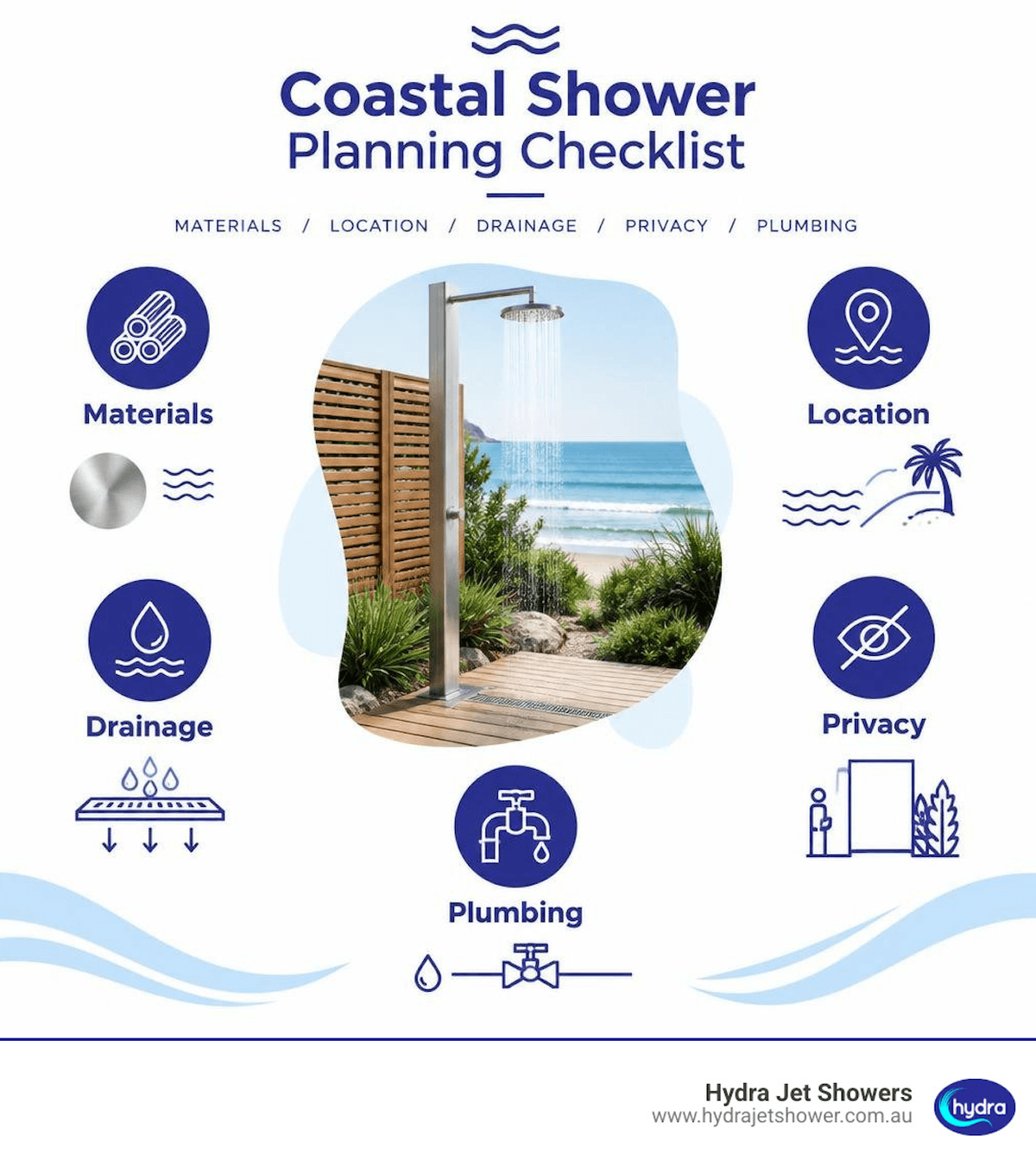
Installing an outdoor fixture near the ocean means dealing with unique atmospheric pressures. Ocean winds carry microscopic salt spray and airborne chlorides inland, settling directly onto exposed surfaces. Standard metals that perform well in inland backyards can quickly experience surface pitting and wear when subjected to persistent sea breezes and ambient humidity. Windblown sand adds an abrasive element that can wear down inferior surface coatings over time.
Environmental Factors
1. Airborne Chlorides
- Inland Installations: Minimal atmospheric salt exposure.
- Coastal Installations: Continuous exposure to windborne salt spray.
2. Moisture & Humidity
- Inland Installations: Standard seasonal rain and humidity.
- Coastal Installations: Persistent sea breezes and coastal mist.
3. Abrasive Elements
- Inland Installations: Occasional garden dust and soil.
- Coastal Installations: Windblown sand and fine coastal grit.
4. Corrosion Tendency
- Inland Installations: Standard oxidation risks.
- Coastal Installations: Accelerated galvanic and crevice corrosion risks.
5. Cleaning Frequency
- Inland Installations: Occasional seasonal washdowns.
- Coastal Installations: Regular fresh-water rinsing recommended.
Properly planning your installation involves understanding these distinct environmental demands. When choosing a shower for coastal homes, material selection and regular care determine how well the installation maintains its visual appeal and function over time.
Understanding Tea Staining and Rust in Beachside Environments
Tea staining is a cosmetic discolouration that often appears on stainless steel surfaces exposed to marine environments. It looks like a light brown stain or superficial surface tarnishing and is caused by airborne chloride deposits settling on the metal without being washed away.
Learning the difference between rust and limescale helps homeowners identify surface buildup early. While structural corrosion compromises the metal itself, tea staining is primarily a surface effect. Regular maintenance helps keep fixtures looking clean. We recommend washing the shower with soapy water and a non-abrasive soft cloth, rinsing thoroughly with clean water. For properties situated within 5 km (3.1 miles) of the shoreline, rinsing down the exterior panel more frequently helps remove salt deposits before they accumulate. A non-abrasive, non-corrosive stainless steel cleaner can also be used for routine upkeep.
Coastal Rinsing in Everyday Use
An outdoor fixture serves a very practical role in seaside properties. Returning from the surf or beach track inevitably brings along sand, salt and grit. Having an outdoor rinse station lets family members wash off chlorine, salt, sand, sunscreen and garden dirt before walking indoors. This keeps interior living spaces cleaner and prevents beach sand from clogging indoor bathroom drainage systems.
What Marine Grade Stainless Steel Means for Coastal Homes
Marine grade metals are engineered to withstand continuous atmospheric weathering and elevated salt concentrations. When steel is exposed to oxygen, it naturally develops an invisible, microscopic passive layer that shields the underlying material from oxidisation. In high-chloride seaside zones, standard grades can lose this protective barrier if the alloy lacks sufficient resistance to chemical attack. Exploring selecting the right stainless steel grade explains why specific metal compositions provide lasting structural integrity in demanding environments.
Why 316 Stainless Steel Is Suited to Coastal Exposure
The inclusion of molybdenum sets 316 marine grade stainless steel apart from general-purpose stainless alloys. Molybdenum significantly increases the metal's resistance to chloride pitting, crevice attack and atmospheric corrosion caused by sea spray. The Australian Stainless Steel Development Association notes that molybdenum-bearing grades are widely specified for marine and coastal applications because of this improved resistance to salt-laden air.
Because of this heightened resistance, 316 marine grade stainless steel is suitable for beachfront installations with no minimum distance requirement from the water. Whether positioned right along an open esplanade or sheltered in a seaside courtyard, this material retains its strength and finish when given basic care.
WaterMark Certification and Australian Plumbing Standards
In Australia, plumbing fixtures connected to mains water supply must meet national standards. HydraJet showers are WaterMark certified under the WaterMark Certification Scheme administered by the Australian Building Codes Board (ABCB).
WaterMark certification confirms that plumbing products comply with the relevant Australian technical specifications. However, WaterMark certification does not replace local installation approvals or council regulations. All connections to the water supply must be carried out by a licensed plumber. Plumbing regulations vary across Australian states and territories, such as those overseen by the Building and Plumbing Commission (BPC, formerly known as the VBA) in Victoria, so always check with your plumber and local municipal council for site-specific requirements.
Choosing Features and Configurations for a Shower for Coastal Homes
Every seaside block has different spatial requirements and plumbing access points. Selecting between a free-standing column and a compact wall-mount unit depends on your outdoor layout, structural walls and intended use. All plumbing fittings are pre-installed inside our shower panels, allowing straightforward connection by a licensed plumber and helping keep installation time and labour to a minimum.
Free-Standing Fixtures for Poolsides and Open Backyards
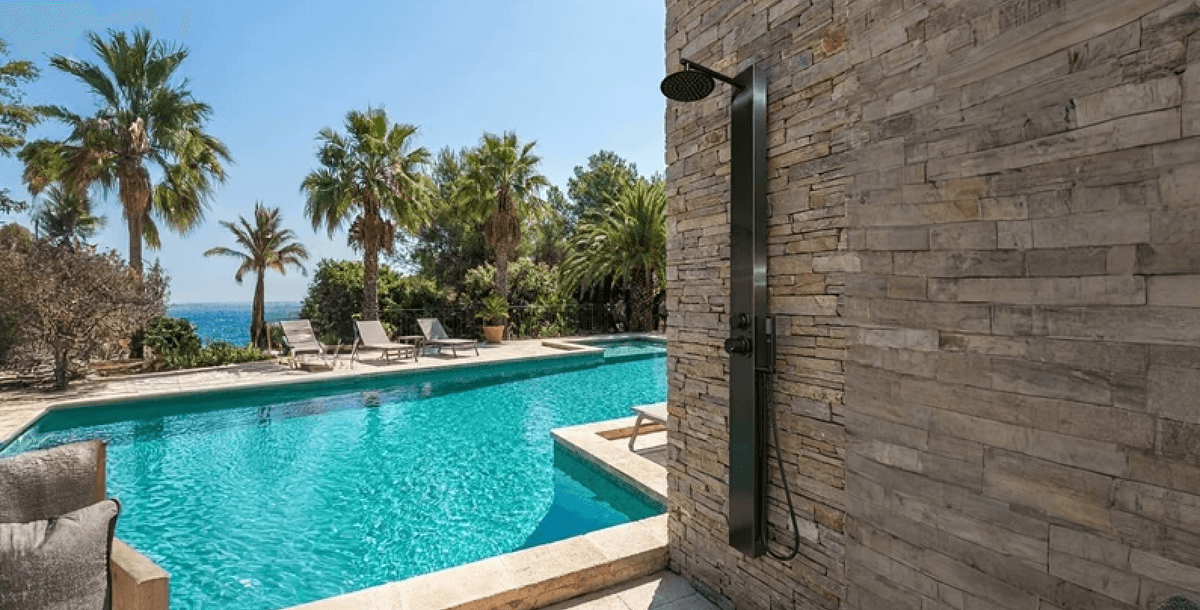
A free-standing layout works well across open garden areas, expansive timber decks and alongside outdoor swimming pools. Because these units stand independently on a solid base, they can become a focal architectural feature within your outdoor entertaining space.
Our best-selling Waikiki free-standing shower features a generous shower rose, an integrated hot and cold mixer, a separate foot wash tap and a hand-held shower for versatile everyday rinsing. If you prefer a bold modern aesthetic, the best-selling Miami Black free-standing shower provides a durable ion plated black finish over 316 marine grade stainless steel. For a minimalist, clean-lined profile, the Noosa free-standing shower delivers a streamlined column suitable for pool surrounds.
Wall-Mount Installations for Compact Coastal Spaces
For properties with compact courtyards, narrow side pathways or existing brick piers, a wall-mount configuration maximises available ground space. These fixtures mount directly to an exterior masonry wall or reinforced structural timber post, keeping the ground footprint completely clear.
The Larissa wall-mount outdoor shower offers an ultra-slimline profile crafted from 316 marine grade stainless steel, making it well-suited for mounting against timber cladding, rendered brickwork or stone feature walls. When planning a wall-mount installation, your builder and licensed plumber will ensure the backing structure has adequate internal framing to support the unit securely. You can also shop the full HydraJet range to compare free-standing and wall-mount options side by side.
Planning for Sand and Gear Rinsing
Positioning your outdoor shower along the main return pathway from the beach ensures maximum usability. Placing the unit near the boundary gate, garden entrance or garage allows surfboards, wetsuits, flippers, beach toys and sandy feet to be rinsed thoroughly before anyone steps onto interior floorboards or carpets.
Long-Term Benefits and Design Integration for Seaside Properties
Integrating an outdoor shower into your landscape design enhances daily convenience and enriches your outdoor lifestyle. For design inspiration, see How Outdoor Showers Became a Staple of Modest Coastal Homes. Surrounding the shower with natural materials like weathered timber decking, natural coastal stone, and architectural privacy battens creates an inviting open-air retreat.
Drainage, Greywater Requirements, and Seasonal Protection
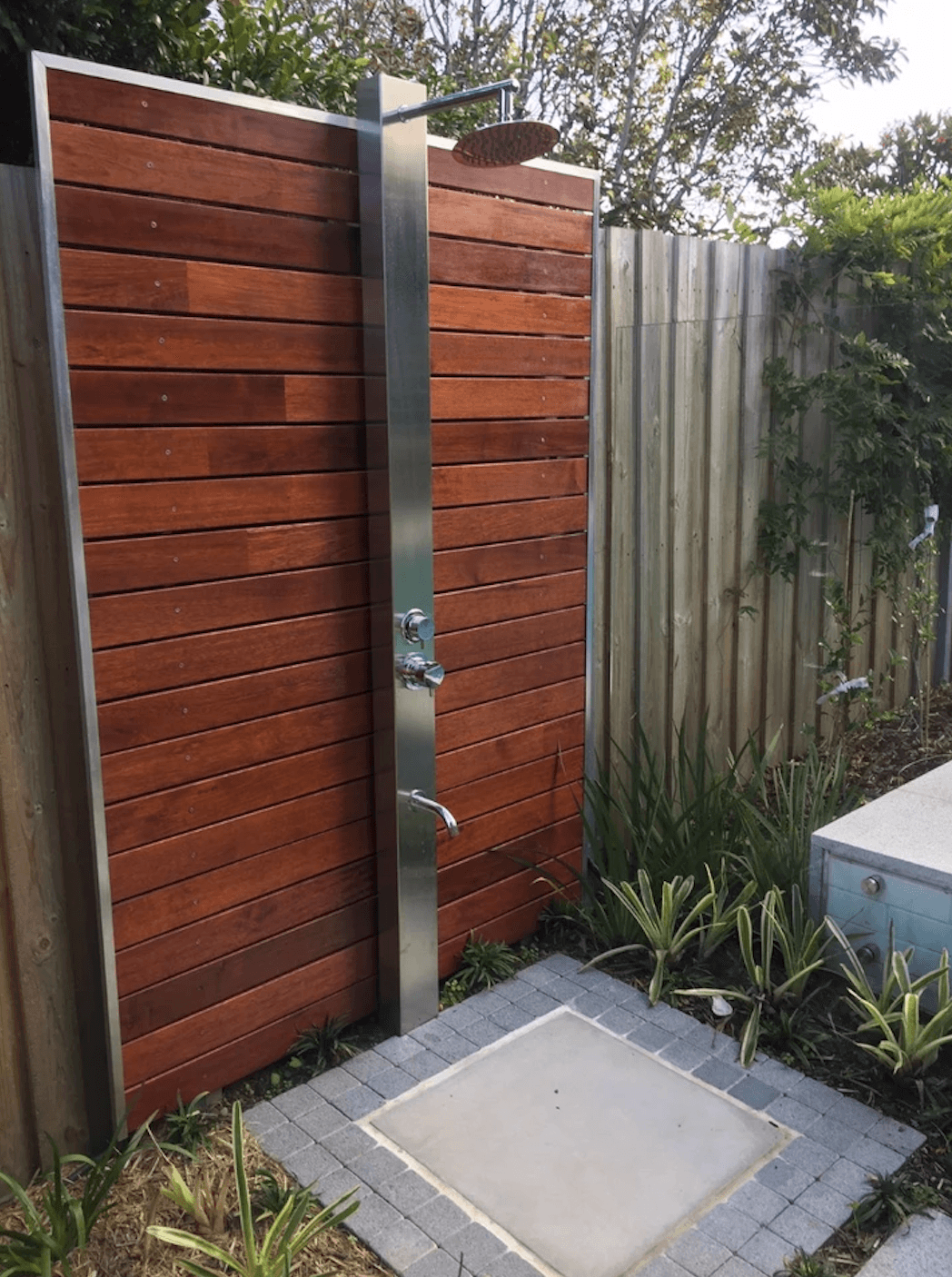
Proper drainage planning prevents pooling water and protects local subsoil. Outdoor showers can drain into permeable gravel soakaways, dedicated garden sumps, or connection points leading to the property drainage system, depending on council rules.
Local council regulations governing greywater runoff vary across Australia. Unenclosed rinse stations using plain water for washing off sand often have different requirements compared to enclosed showers using soaps and shampoos. Always consult your licensed plumber and local municipal authority to ensure compliance with regional drainage codes.
In areas that experience colder winter temperatures, protecting your outdoor plumbing is essential. Having your licensed plumber install accessible isolating valves allows you to shut off and drain external water lines before freezing conditions occur, preventing pipe damage during cold snaps.
Privacy Enclosures and Landscaping Harmony
Creating an outdoor shower space often involves balancing open-air bathing with appropriate privacy screening. Slatted timber screens made from treated hardwood or composite battens allow refreshing sea breezes to pass through while shielding the area from neighbouring viewlines. Incorporating hardy, coastal-tolerant plants like native grasses, banksias and coastal rosemary creates a lush, low-maintenance backdrop that thrives in sandy soils and salt air.
What to Expect at HydraJet Showers
HydraJet Showers was founded in 1999 and is an Australian business based in Dandenong South, Victoria. We design and supply ready-to-install 316 marine grade stainless steel outdoor showers for domestic, commercial, council, hotel and resort applications.
Visitors are welcome to view our full collection at our Melbourne showroom located at 73-75 Williams Road, Dandenong South. Every shower is backed by our 10 Year No Rust Guarantee, subject to no evidence of the use of corrosive or abrasive cleaners. This guarantee applies to beachfront installations with no minimum distance from the water, in addition to your statutory rights under the Australian Consumer Law.
To make upgrading your outdoor area effortless, we provide free home delivery to most suburbs in Australian capital cities and most major regional centres. If you have questions about choosing the right setup for your property, you can easily contact our team for knowledgeable support.
Practical Steps to Plan Your Seaside Shower Installation
Planning an outdoor shower installation involves a few straightforward steps:
- Select the Ideal Location: Choose a spot with direct access from the beach or pool, adequate sunlight to assist drying, and suitable privacy.
- Examine Water Supply Lines: Identify where existing hot and cold water lines enter the exterior area. All plumbing fittings are pre-installed inside HydraJet shower panels to facilitate straightforward connection by a licensed plumber.
- Plan the Base and Drainage: Install stable, slip-resistant flooring such as a concrete slab, stone pavers, or treated timber decking over an approved drainage soakaway or council-approved drain.
- Engage Professional Trades: Ensure a licensed plumber completes the water connections and pressure testing in accordance with state regulations, and consult your builder for wall-mount structural support.
To find the perfect model for your home, browse the full range online or view the customer installation gallery for real-world design inspiration.
Plan Your Coastal Outdoor Shower With Confidence
Choosing the right outdoor shower transforms how you enjoy your seaside property. By selecting durable 316 marine grade stainless steel fixtures, planning practical drainage, and designing an inviting landscape integration, you create an enduring outdoor rinse station tailored for coastal living.
Frequently Asked Questions About Coastal Outdoor Showers
Why are outdoor showers so popular for coastal homes?
Outdoor showers provide a convenient way to rinse off ocean salt, beach sand, sunscreen and garden dirt before stepping indoors. This prevents abrasive sand from spreading through living spaces and entering indoor drainage systems. Additionally, showering outdoors in the fresh air complements the relaxed lifestyle associated with coastal living.
What material is best for a shower exposed to coastal salt air?
The most suitable material for coastal outdoor showers is 316 marine grade stainless steel. It contains molybdenum, an alloying element that provides superior resistance to chloride attack, surface pitting and sea-spray corrosion compared to standard stainless steel grades.
Do I need council approval or special drainage for an outdoor beach shower?
Drainage and approval regulations depend on your specific local council policies and the intended use of the shower. Quick rinse stations using clean water to wash off sand often have different requirements than fully enclosed showers where soaps and cleansers are used. You should always speak with a licensed plumber and check with your local municipal council before installing drainage.
Can an outdoor shower be used with hot and cold water all year round?
Yes, many outdoor shower models include integrated hot and cold mixers, allowing comfortable year-round use when connected to your home's hot water supply. A licensed plumber can connect both hot and cold lines directly to the pre-installed internal fittings.
How do you winterise an outdoor shower in colder coastal climates?
In regions subject to near-freezing or sub-zero winter temperatures, outdoor showers should be winterised to prevent pipe expansion and fitting damage. This is typically done by turning off the external isolation valves, disconnecting flexible supply hoses, and opening the shower mixer and taps to drain any remaining water from the internal lines.
What is the difference between free-standing and wall-mount coastal showers?
Free-standing showers are self-supporting columns mounted directly onto a concrete slab, stone paving or timber deck, making them ideal for poolside areas and open garden spaces. Wall-mount showers fix directly to an external wall, post or masonry pier, conserving ground space and offering a streamlined setup for compact courtyards and pathways.