Can an Outdoor Shower Have Hot and Cold Water?
Yes. A licensed plumber can connect separate hot and cold water lines to an outdoor shower with a hot and cold mixer. A cold-only shower works for a quick rinse, but hot water makes it more comfortable. Before choosing a spot, check access to existing plumbing, drainage, privacy and local council requirements.
Key Takeaways
- A free-standing shower does not need a wall; a wall-mounted shower can suit a smaller space.
- Ask a licensed plumber about safe temperature control and where the used water will go.
- An outdoor shower hot cold setup gives you the flexibility to rinse off comfortably in any season.
- Explore outdoor showers after you know what your site needs.
At HydraJet Showers, we see how a well-planned shower can make it easier to rinse off salt, sand or pool water before heading inside. Our showers are WaterMark certified under the WaterMark Certification Scheme administered by the Australian Building Codes Board (ABCB). Our 10 Year No Rust Guarantee is subject to no evidence of the use of corrosive or abrasive cleaners.
Whether you are planning a poolside rinse station or a complete wash zone, an outdoor shower hot-and-cold configuration offers the comfort and versatility needed across every season.
Common Risks and Planning Considerations for Outdoor Hot and Cold Water Lines
Installing an outdoor shower with dual temperature lines requires careful planning to prevent plumbing complications later. Running hot water outdoors introduces thermal dynamics that cold lines do not experience. Supply pipes exposed to sub-zero temperatures during winter can freeze, expand, and rupture. Plumbers mitigate this risk by selecting appropriate pipe depth, installing lagging insulation, and incorporating dedicated isolation valves that allow exposed sections to be drained during colder months.
Thermal expansion and water pressure fluctuations also affect outdoor fittings. Standard garden tap fittings or temporary hoses cannot withstand continuous hot water pressure; hot water causes conventional garden hoses to soften and burst under standard mains pressure. A permanent installation requires rigid piping, such as properly secured copper or approved composite pipework, connected through a dedicated isolation valve and compliant backflow prevention device.
Safe temperature management is another essential planning consideration. Water delivered directly from a storage hot water unit can cause accidental scalding. Connecting a tempering valve or thermostatic control ensures delivered water remains at a safe temperature for all family members. Furthermore, shower runoff must never flow directly into a swimming pool, as soap residues, body oils, and organic matter disrupt water chemistry and place unnecessary strain on pool filtration systems.
Choosing the Right Location
Selecting the right position balances convenience with structural practicality. Positioning the shower close to an existing indoor bathroom, laundry, or continuous-flow water heater reduces the distance pipes must travel, keeping trenching and labour straightforward.
You should also evaluate daily sun exposure, prevailing wind patterns, and natural sightlines. Placing the shower behind a structural screen, masonry feature wall, or established landscaping creates an open yet discreet space. If you are assessing layout ideas for your property, reading about reasons to add an outdoor shower can help you decide how the fixture fits into your broader backyard design.
Drainage and Local Requirements
Proper drainage design prevents water pooling, soil erosion, and structural foundation damage. In Australia, drainage regulations vary between states and local councils. In Victoria, plumbing standards are regulated through the Building and Plumbing Commission (BPC), formerly known as the VBA, while Queensland plumbing is guided by the QBCC.
Depending on your local municipality, an outdoor hot and cold shower may require a dedicated grated drain plumbed directly into the household sewer or stormwater network, rather than freely soaking into the garden. Always consult your local council and engage a licensed plumber to verify the specific drainage mandates for your property before commencing site works.
What an Outdoor Hot and Cold Shower System Involves
A complete dual-supply outdoor shower functions identically to an indoor shower system. Two separate water lines, one cold supply from the main service and one hot supply from your hot water unit, run directly to the shower station. These lines connect to an integrated hot and cold mixer tap, allowing you to dial in your preferred water temperature smoothly.
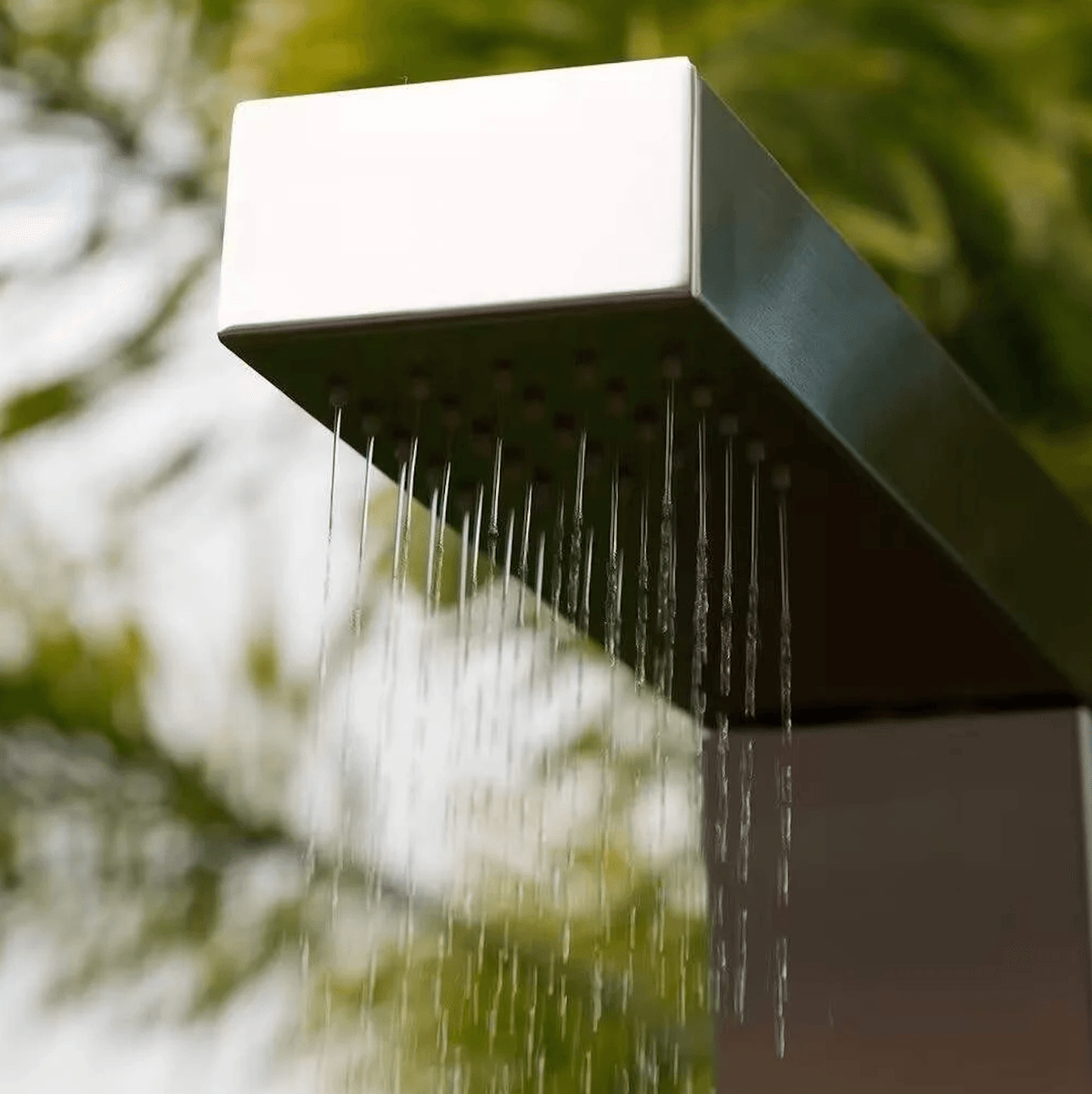
Connecting an outdoor unit involves several integrated plumbing components:
- Dedicated supply piping: Durable copper or approved outdoor-rated polymer piping routed beneath pavers, decking, or within wall cavities.
- Dual isolation valves: Independent shut-off points installed on both the hot and cold lines to permit easy servicing or winter shutdown.
- Tempering device: A valve that blends hot and cold water before it reaches the outlet to protect against scalding.
- Backflow prevention: Dual-check or non-return valves that stop outdoor water from siphoning back into the potable drinking supply.
- Internal pre-installed connections: All plumbing fittings are pre-installed inside the shower panel across our range, allowing straightforward connection by a licensed plumber.
Taking a warm shower after a swim helps remove residual chlorine, salt, sunscreen, and pool chemicals before relaxing indoors. To understand more about post-swim hygiene, read about the hygiene benefits of rinsing after swimming.
Choosing a HydraJet Shower and Planning Its Installation
Every property presents unique structural considerations. Selecting between a free-standing column and a wall-mount unit depends on your spatial layout, architectural features, and available mounting surfaces. Connection to the water supply must be carried out by a licensed plumber to ensure compliance with Australian standards.
Free-Standing Post Mounting
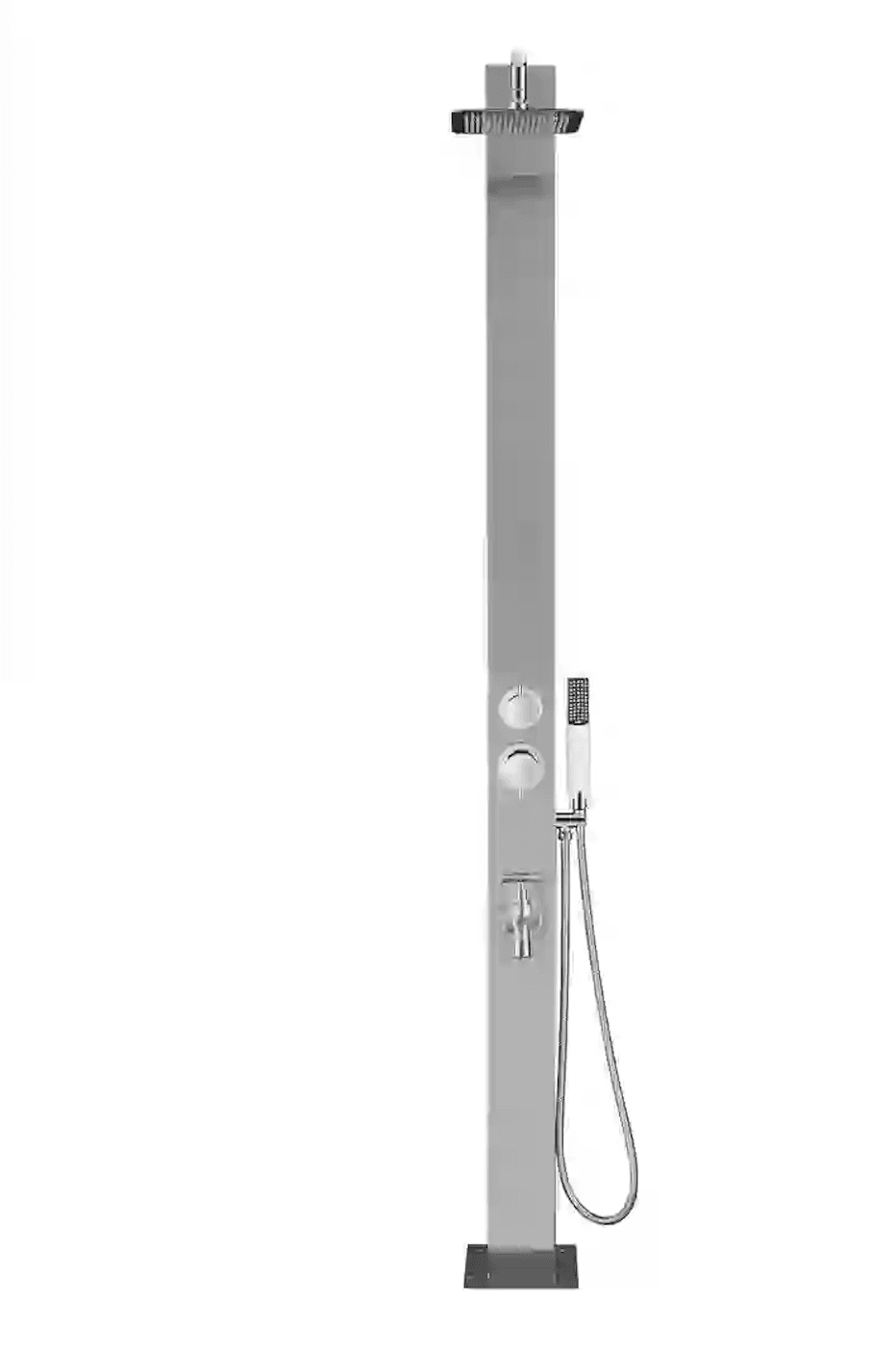
A free-standing shower provides complete design flexibility, allowing you to position the fixture anywhere on your pool deck, patio, or garden path without needing an adjoining wall. Free-standing units feature a solid welded base plate anchored directly onto a reinforced concrete pad or structural timber deck.
Our free-standing collection, including the best-selling Waikiki free-standing shower and the Noosa free-standing shower, incorporates concealed bottom inlets. The hot and cold supply pipes emerge directly beneath the base plate, leaving all mechanical connections fully enclosed inside the 316 marine grade stainless steel pillar for a clean architectural finish.
Wall-Mount Options
If space is limited around your pool surround or entertaining deck, a wall-mount shower panel attaches neatly to an external brick wall, rendered masonry surface, or reinforced timber stud framing.
Options like the best-selling Miami wall-mount shower or the streamlined Larissa wall-mount shower feature a sleek profile that preserves outdoor walkway space. Because all internal pipework sits safely within the panel casing, your licensed plumber simply connects the supply lines to the pre-installed standard fittings, which helps keep installation time and labour to a minimum.
316 Marine Grade Stainless Steel, WaterMark Certification and Long-Term Care
Outdoor fixtures in Australia face intense UV exposure, airborne dust, heavy rain, and coastal sea breezes. Standard indoor brass tapware or lower grades of steel deteriorate quickly when exposed to these external elements.
We construct our shower bodies from 316 marine grade stainless steel. The addition of molybdenum in 316 marine grade stainless steel significantly enhances its resistance to pitting and crevice corrosion, making it the ideal material for open-air environments. For more technical background on material durability, explore our guide to stainless steel grade selection.
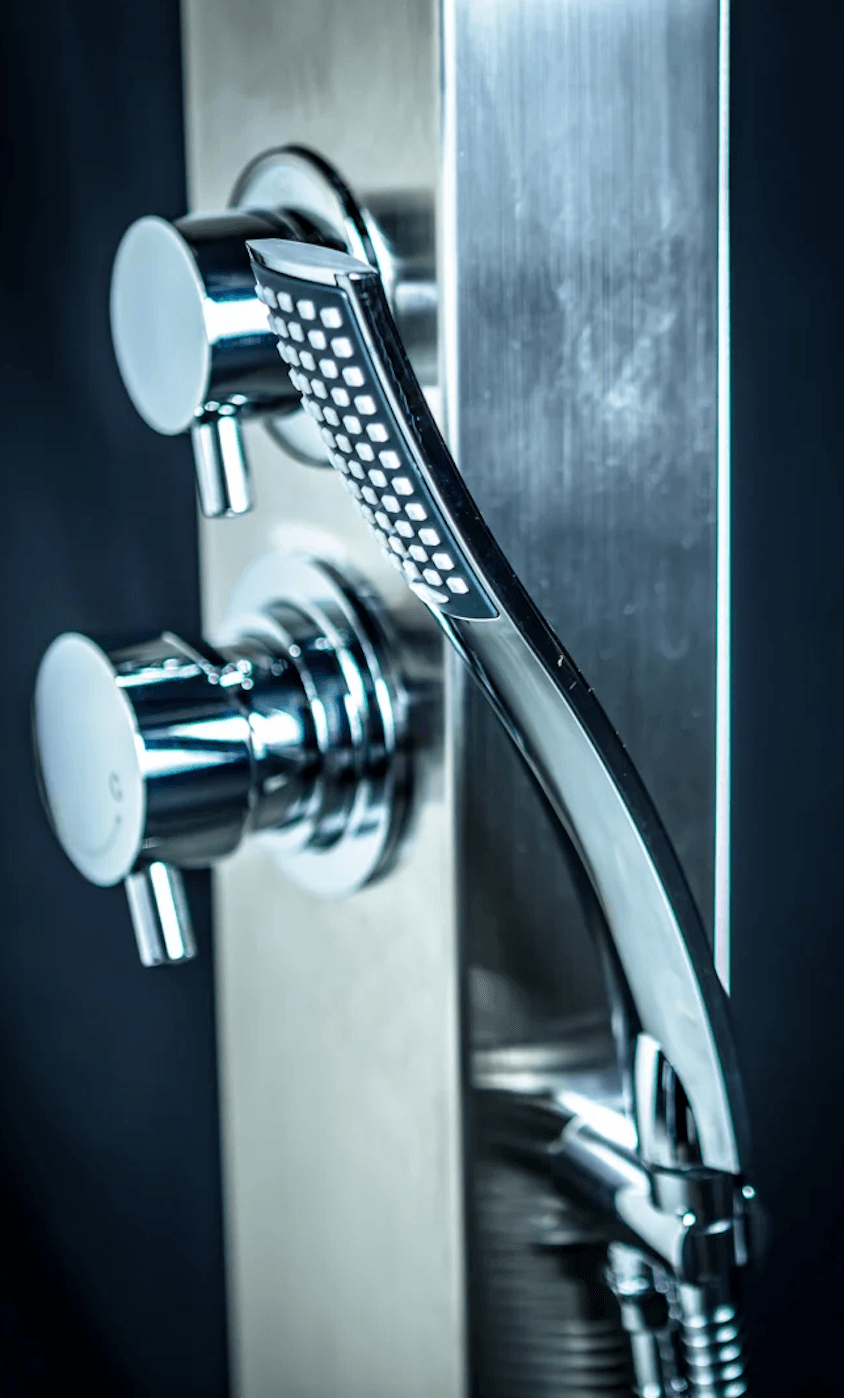
If you prefer a contemporary architectural aesthetic, models such as the Noosa Black outdoor shower undergo an advanced ion plated black finish. This process bonds colour at a molecular level, providing exceptional durability without peeling or flaking under the hot sun.
All HydraJet Showers are WaterMark certified under the WaterMark Certification Scheme administered by the Australian Building Codes Board (ABCB). WaterMark certification demonstrates that our fixtures comply with national plumbing standards for material safety, water tightness, and pressure handling. You can learn more through our detailed information about WaterMark certification. Please note that while WaterMark certifies product compliance, local installation approvals and drainage compliance must always be verified with your local council and licensed plumber.
Maintenance and Care
To keep your shower in pristine condition:
- Wash the panel regularly with warm soapy water and a non-abrasive soft cloth, then rinse thoroughly with clean water.
- For installations located within 5 km (3.1 miles) of the shoreline, rinse salt deposits from the surface more frequently.
- A non-abrasive, non-corrosive stainless steel cleaner may be applied periodically to maintain surface lustre.
- Avoid all abrasive cleaners, scouring pads, wire wool, bleach, descalers, or acid-based solutions, as harsh chemicals will damage the protective passive layer of the steel.
Our 10 Year No Rust Guarantee is subject to no evidence of the use of corrosive or abrasive cleaners. This guarantee applies to beachfront installations with no minimum setback distance from the ocean, giving you total peace of mind along the Australian coast. The guarantee applies in addition to your rights under the Australian Consumer Law. Detailed terms and maintenance instructions can be reviewed via our warranty guidelines.
What to Expect at HydraJet Showers
HydraJet Showers is an Australian business founded in 1999 and based in Dandenong South, Victoria. Our shower collections are carefully designed by our founder to deliver robust functionality, modern aesthetics, and seamless integration into residential, commercial, council, and resort projects.
If you would like to inspect our products in person, our Melbourne showroom is located at 73-75 Williams Road, Dandenong South, Victoria. We provide free home delivery to most suburbs in Australian capital cities and most major regional centres, ensuring your shower arrives securely packed and ready for on-site rough-in. To view current designs and detailed dimensions, browse the complete HydraJet range.
Practical Installation Steps for Your Backyard
Planning an outdoor shower involves coordinating site preparation, structural support, and plumbing rough-in with qualified professionals. Because connection to the water supply must be carried out by a licensed plumber, engaging your trades early ensures your project complies with Australian standards. All plumbing fittings are pre-installed inside the shower panel across our range, which helps keep installation time and labour to a minimum.
When preparing your property for installation, key factors to review include:
- Site Selection and Clearance: Positioning the shower with adequate clearance from boundary walls, garden beds, and pool fencing to create an open yet private space.
- Plumbing Rough-In: Having your licensed plumber extend insulated hot and cold lines to the location, incorporating isolation valves, backflow prevention, and safe tempering controls.
- Structural Mounting: Preparing a solid foundation, such as a reinforced concrete pad for free-standing columns or structural timber/masonry framing for wall-mount models. For technical mounting templates, refer to our installation resources.
- Testing and Commissioning: Ensure the licensed plumber completes full pressure testing and flow checks under standard mains pressure prior to final handover.
Installation Safety Checkpoints:
- Have a licensed plumber assess the water supply, mixer, temperature control, and backflow requirements.
- Confirm drainage arrangements and local council requirements before installation.
- Check that the mounting surface and fixings are structurally suitable for the chosen shower model.
- Follow appropriate cleaning and winterisation guidance to protect pipework and hardware long term.
If you have specific layout questions, contact HydraJet Showers for project assistance or view completed projects in our gallery for real-world design inspiration.
Plumbing an outdoor shower with both hot and cold lines delivers unmatched comfort, practical poolside convenience, and refined outdoor luxury. By selecting 316 marine grade stainless steel, checking local drainage regulations, and engaging a licensed plumber, you ensure your setup remains reliable for years to come.
- Shop the HydraJet range to find the ideal free-standing or wall-mount model for your home.
- Contact HydraJet Showers for tailored product selection advice and trade enquiries.
- Discover our popular Miami outdoor shower collection for premium poolside styling.
Frequently Asked Questions About Outdoor Shower Hot Cold Installations
Can you run a hot water line from an existing indoor system to an outdoor shower?
Yes, a licensed plumber can extend hot and cold water lines from an existing indoor storage or continuous-flow water heater directly to your outdoor shower. The plumber will assess the capacity of your existing hot water unit, route insulated pipework through external walls or sub-floor trenches, and install appropriate isolation valves and a tempering valve to ensure the delivered water is balanced at a safe temperature.
How do I maintain an outdoor shower in a coastal environment?
To maintain an outdoor shower near the coast, rinse the exterior surfaces regularly with fresh water to wash away airborne sea salt, sand, and atmospheric grime. Clean the fixture periodically using warm soapy water and a soft microfibre cloth. For properties located within 5 km (3.1 miles) of the ocean, more frequent rinsing is recommended. Never use steel wool, scourers, descaling agents, or abrasive chemical cleaners, as these strip the protective layer from the stainless steel.
Do outdoor hot and cold showers require council approval in Australia?
Council approval requirements depend on your property layout, state plumbing regulations, and how the wastewater is managed. In many Australian jurisdictions, cold-water rinse showers over permeable ground require minimal administrative oversight, whereas hot and cold showers connected to municipal sewer lines or requiring permanent structural roofing and grated drains must meet specific local council guidelines. Always consult your local municipality and a licensed plumber prior to installation.
How do you prevent outdoor shower pipes from freezing in cold weather?
In alpine or frost-prone regions, your licensed plumber should install dedicated isolation shut-off valves and low-point drain taps inside the house or in an insulated utility box. When winter approaches, shut off the external water supply lines and open the outdoor shower mixer tap and foot wash valve to drain residual water completely from the internal cartridge and pipework. Insulating all exposed supply lines with heavy-duty thermal lagging also protects against thermal shock.
What is the difference between a free-standing and a wall-mount outdoor shower?
A free-standing outdoor shower is an independent vertical column anchored directly to a concrete pad, deck, or structural footing using a welded base plate, with hot and cold water fed through concealed bottom inlets. A wall-mounted outdoor shower is secured directly against an existing structural wall, privacy screen, or masonry feature, making it an efficient space-saving option for narrow pathways and compact courtyards. Both configurations accommodate integrated hot and cold mixers.